Guides

Why now is a good time to start roasting coffee in Uzbekistan
Uzbekistan's coffee market is at a rare point in its development: demand is already growing, while local roasting is far from saturated. That creates openings for coffee shops, HoReCa projects, vending operators and companies that want to launch a coffee brand of their own.
Published estimates suggest coffee consumption in the country could grow from 6,000 tonnes in 2023 to 7,740 tonnes by 2028. Since 2020 demand has been rising by an average of 8.5% a year. For a country where tea is still traditionally the main drink, that is a notable shift in consumer habits.
The market is growing, but the infrastructure is still taking shape
New coffee shops are opening across Uzbekistan, coffee to go is spreading and demand for whole-bean coffee is rising. The supply of good, freshly roasted coffee, however, is only just emerging.
In a mature market, new projects have to compete with a long list of strong players. In Uzbekistan, roasters still have the chance to claim a niche before the market becomes crowded and highly competitive.
Consumers are ready to pay for quality
The category is growing for more reasons than the popularity of coffee shops. Incomes and urban consumption are both rising. According to national statistics, the average nominal wage for 2025 was 6,376,700 soums — 18.9% more than a year earlier.
The audience that looks for more than just the cheapest option is steadily widening: freshly roasted coffee with a clear flavour, consistent quality and good service.
Tourism is raising the bar for coffee
In 2025 Uzbekistan received 11.7 million foreign tourists — 46.8% more than a year earlier. The target for 2026 is around 12 million visitors.
Tourists expect a consistent espresso, a well-made cappuccino and fresh coffee in hotels, restaurants, airports and coffee shops. HoReCa increasingly needs not just coffee for the menu, but a product of consistent quality.
For local roasters that opens up B2B: supplying coffee shops, restaurants, hotels, vending operators and corporate clients.
The mid-market is the main opportunity
The market is still largely split between affordable instant coffee and expensive drinks in coffee shops. Between them, a mid-market is emerging — good whole-bean coffee at an accessible price.
Businesses in that space usually need stable commercial coffees rather than rare specialty lots: Brazil, Vietnam, arabica and robusta blends with a clear flavour and predictable costs.
Local roasting makes it possible to supply fresh beans, tailor the profile to the client, work with flexible volumes and respond to demand faster.
Local roasting gives you more control
A roastery of your own can be a standalone business or a new line within an existing company.
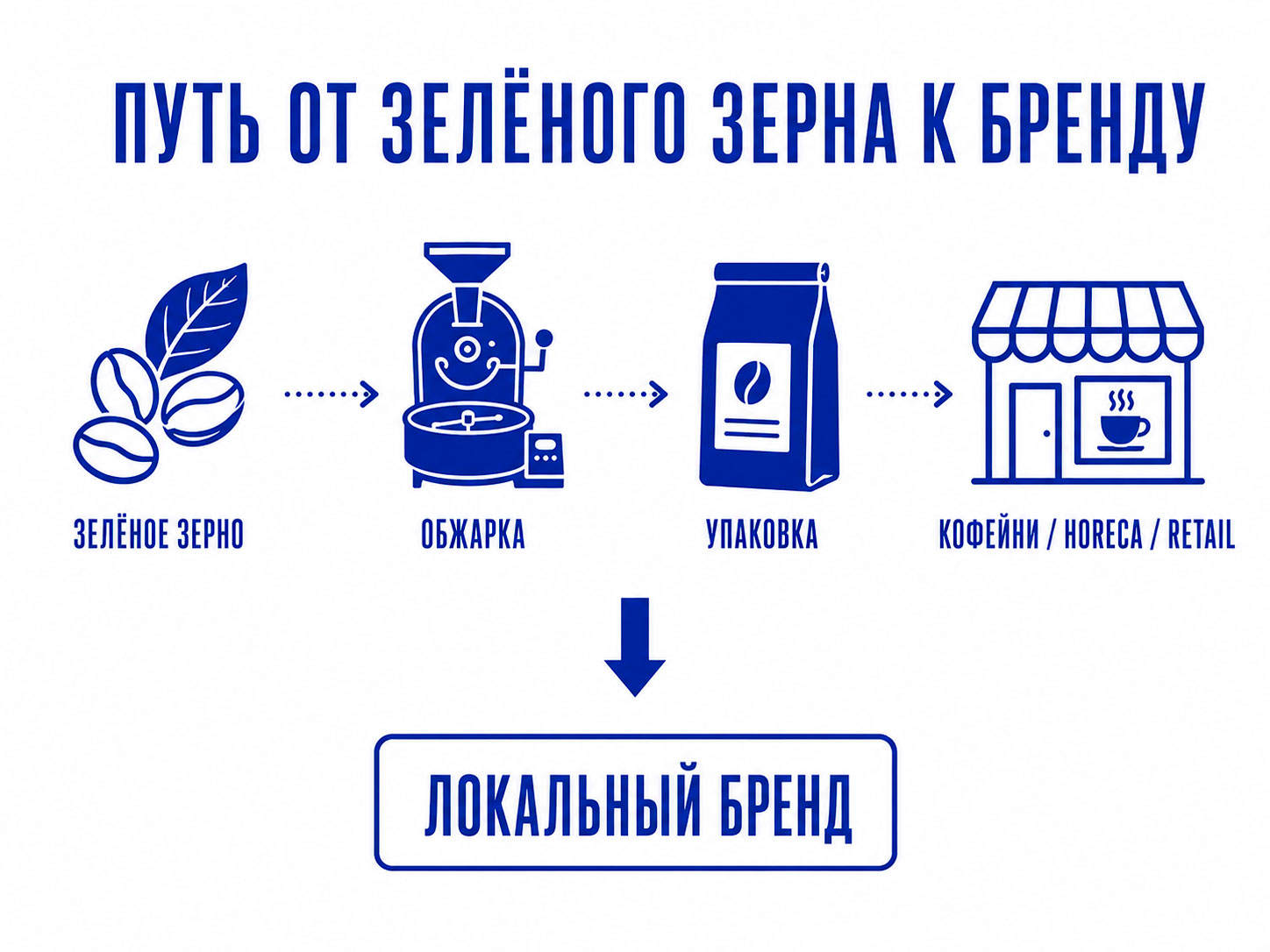
Roasting also lets you produce coffee for retail, marketplaces and corporate clients, and to turn the path from green bean through roasting and packaging into a fully fledged local brand.
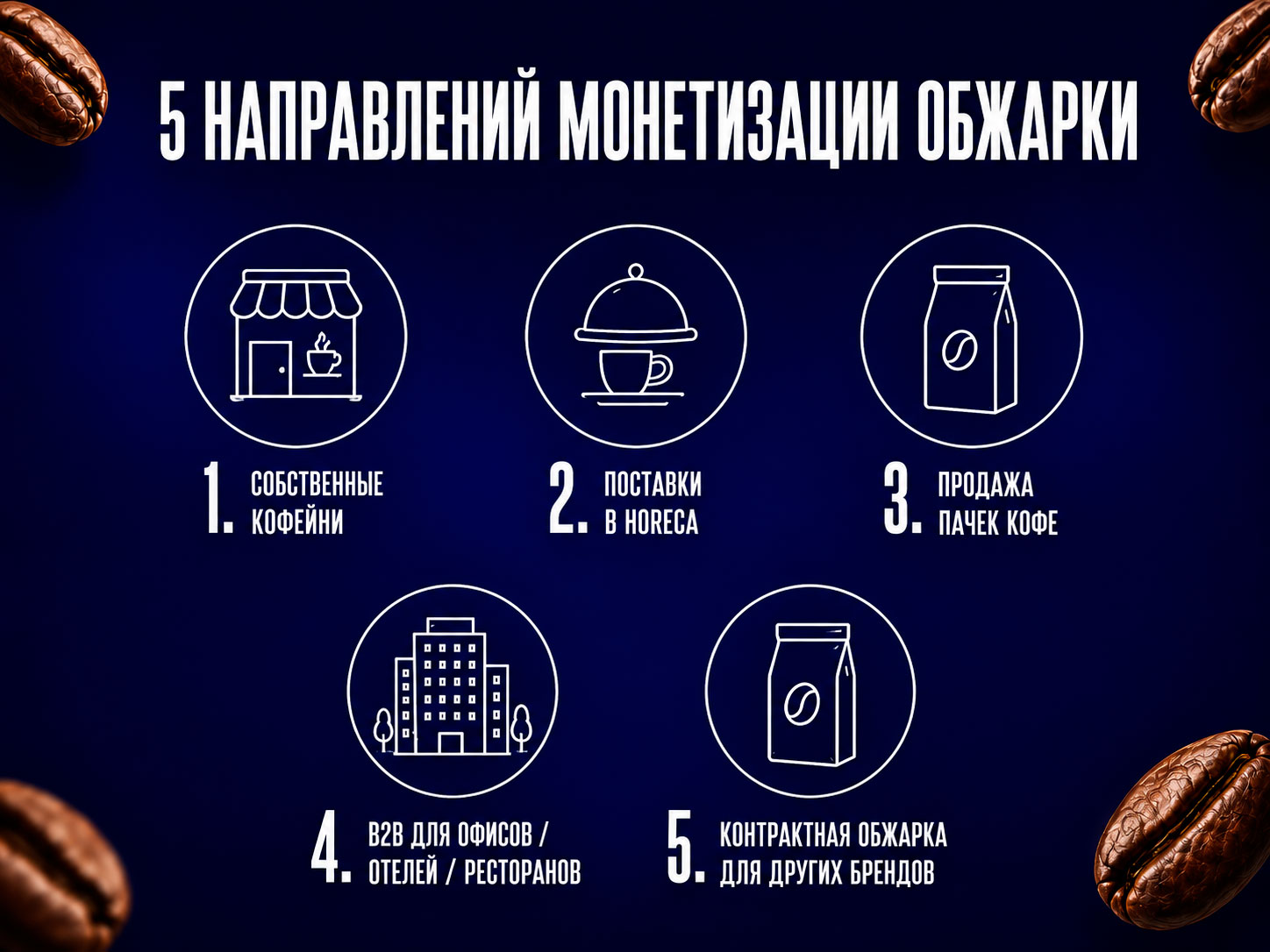
The main ways to monetise
- your own coffee shops;
- supplying HoReCa;
- selling retail bags of coffee;
- B2B for offices, hotels and restaurants;
- contract roasting for other brands
Why it matters to launch professionally
Roasting is not simply a matter of buying a roaster. Mistakes at the start can lead to unnecessary costs, inconsistent quality and weak project economics.
What to decide before launching
- the format and target segment;
- production volume;
- the sales model;
- equipment;
- green bean supply;
- roast profiles;
- quality control;
- packaging and positioning;
- the economics of the finished product.
A launch needs a whole system: the roaster, green beans, roast profiles, quality control, sales channels and packaging. Professional advice helps bring those elements together into a working business model.
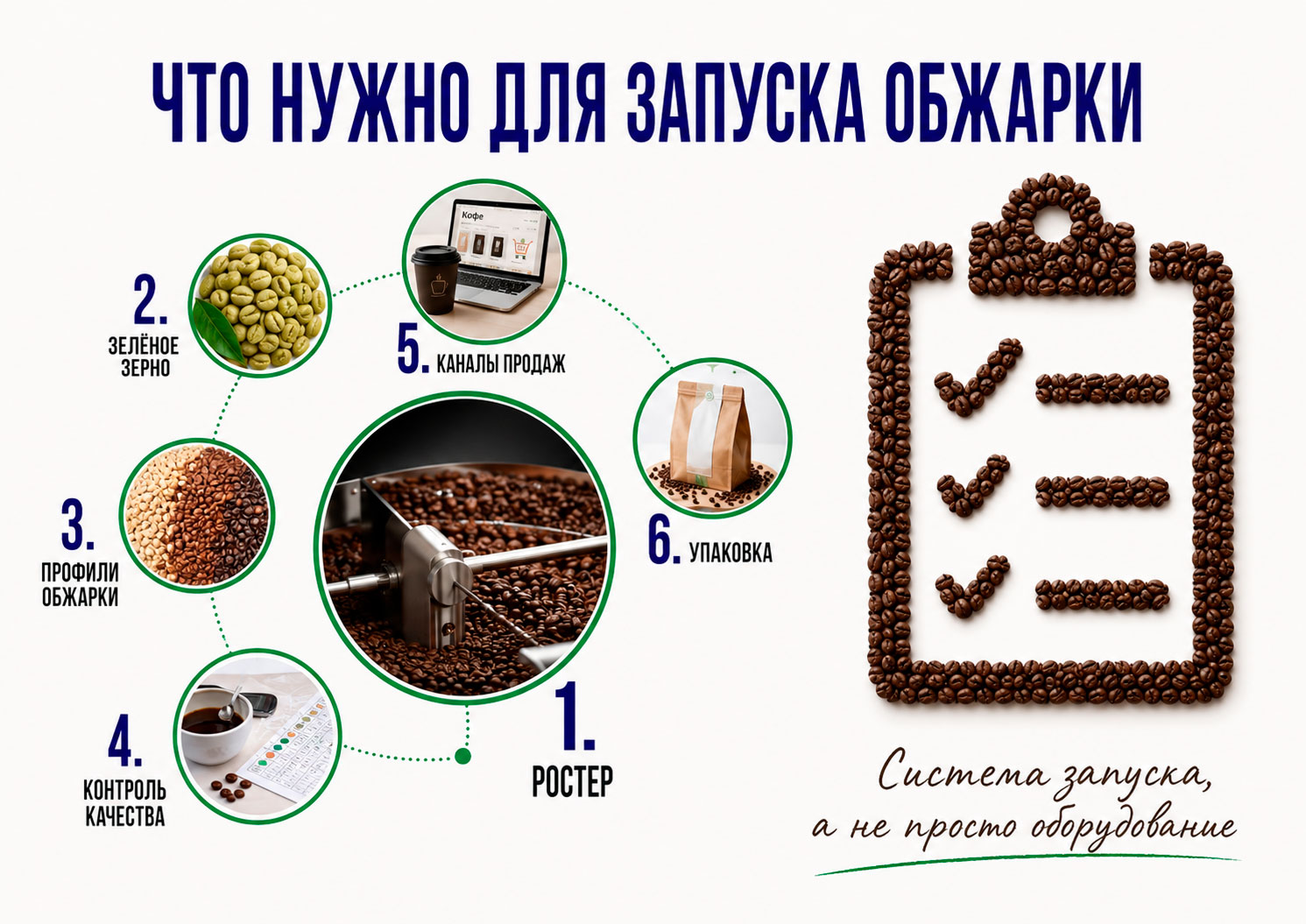
How Green Coffee Hub helps you start roasting
Green Coffee Hub does more than supply green coffee. We help companies launch their own roasting operation and develop an existing coffee business.
We can help choose the format and equipment, calculate requirements, select green beans, run test roasts and cuppings, and build the product range.
That expertise is useful to coffee shops, HoReCa businesses, vending operators, new brands and established roasters alike.
Demand for coffee in Uzbekistan is already growing, and there are still not enough professional players. Starting a roastery today is a chance to take a place in an industry that is moving into a new stage of its development.